
WHAT DOES IT ALL MEAN?!?
This article is more of a list of all of the terms used when working with vacuum relays. This article will help you understand a little bit better what all of this means.
Basic Relay Terms
ARC – an electric discharge between mating relay contacts when an energized circuit is interrupted.
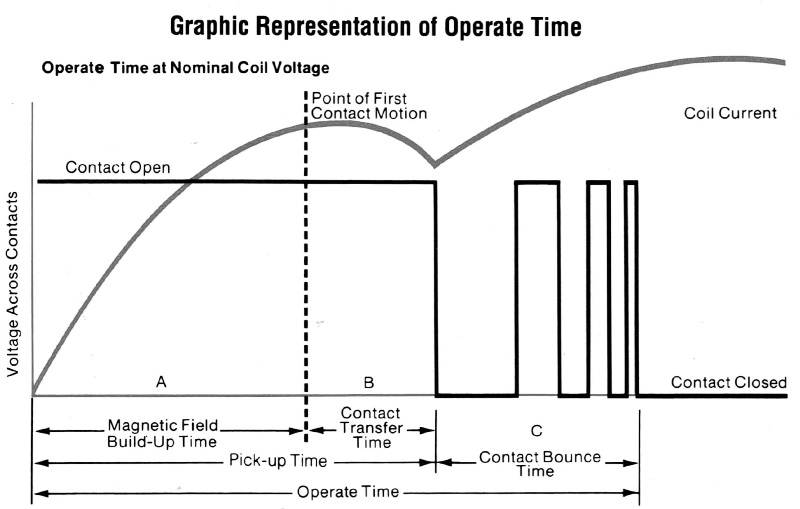
CONTACT BOUNCE – the intermittent undesirable opening of closed contacts or closing of contacts.
BREAK – the opening of closed contacts to interrupt an electrical circuit.
VOLTAGE BREAKDOWN – and undesirable condition of arcing within the relay due to overvoltage.
COLD – an unenergized electrical circuit.
DIELECTRIC – and insulating medium capable of recovering, as electrical energy, all or part of the energy required to establish an electrical field (voltage stress). The field, or voltage stress, is accompanied by displacement or charging currents. A vacuum is the only perfect dielectric.
HOT – an energized electrical circuit.
MAKE – the closure of open contacts to complete an electrical circuit.
Definitions of Specifications
AMBIENT TEMPERATURE RANGE – The range of environmental temperatures in which the relay mounted in the equipment will operate safely. Heat will be generated by the current flowing through the relay, which will elevate the temperature above ambient depending on the current level imposed.
BOUNCE TIME – The time interval between when the contact first makes, and when the last contact make occurs.
COIL HI-POT – The minimum voltage which the relay coil terminals will isolate when the relay is properly mounted
COIL RESISTANCE – The DC resistance, in ohms, of the coil at 25 degrees C
CONTACT ARRANGEMENT – The most commonly made relays are as follows: Single Pole Single Throw (SPST), Single Pole Double Throw (SPDT), Double Pole Double Throw (DPDT), Four Pole Double Throw (4PDT).
CONTACT CAPACITANCE – Contact capacitance is measured either between open contacts or between contacts and ground. Measurements are made per MIL-STD-202, Method 305, at 1 kHz.
CONTACT FORM – The most commonly made relay forms are as follows:
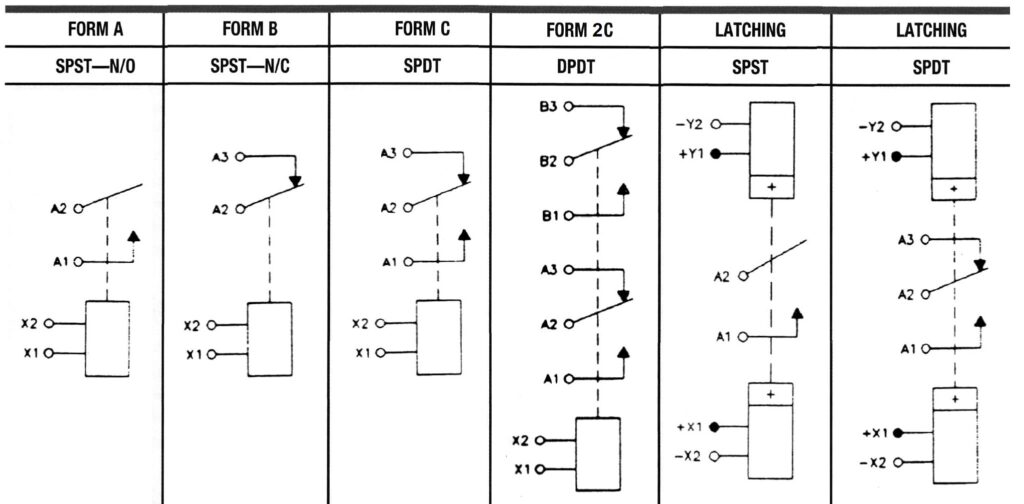
CONTACT RESISTANCE – In vacuum relays, the resistance of closed contacts is measured as voltage drop across contacts carrying 1 amp at 6 Vdc. Measurement is made in accordance with MIL-R-83725, SAE ARD 50031, or MIL-R-6106. In gas-filled relays, 1 amp at 28 Vdc is used to measure contact resistance. “Kelvin” connections should be used to obtain accurate readings.
CONTINUOUS CURRENT – The maximum current that can be carried by the closed contacts of the relay for a sustained time period. This specification is determined by measuring the resistance heating effect on crucial relay components and must be derated at RF frequencies.
DIELECTRIC STRENGTH – The maximum allowable AC rs voltage (50 or 60 Hz) which may be applied between two test points, such as the coil and case or current carrying and non-current carrying points, without leakage current in excess of 1 milliamp.
DROP-OUT VOLTAGE – The voltage at which all contacts return to their “normal”, unoperated positions. (Applicable only to non-latching relays.)
GAS RELAY – A switching relay that uses an pressurized inert gas as the dielectric.
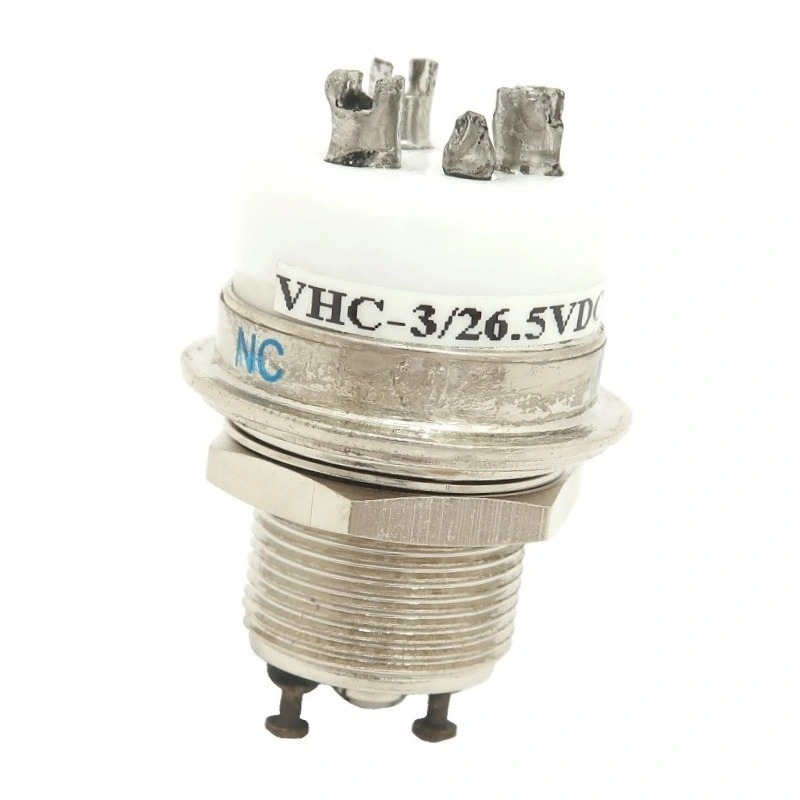
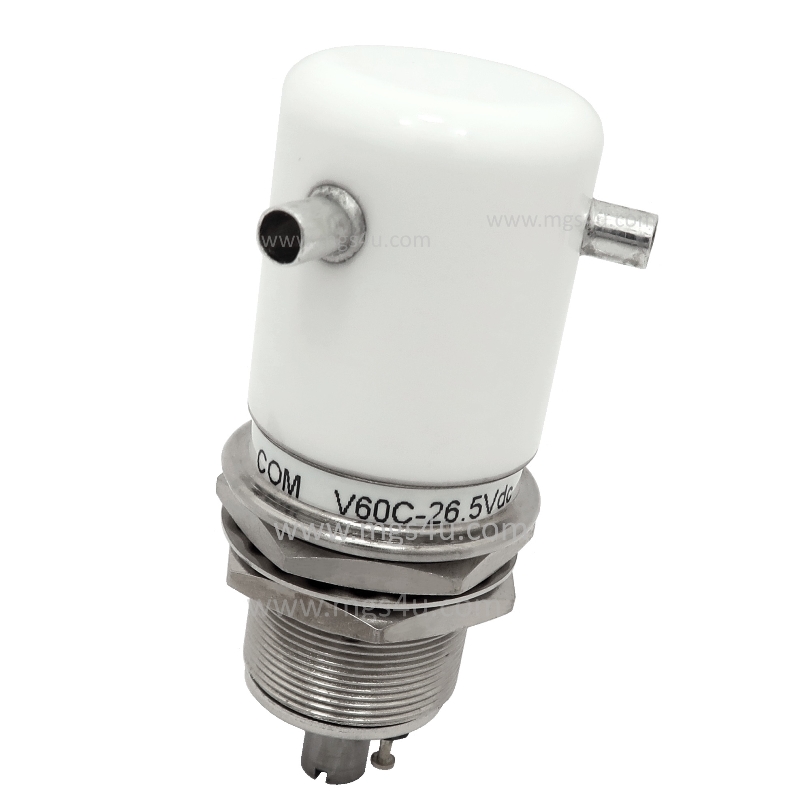
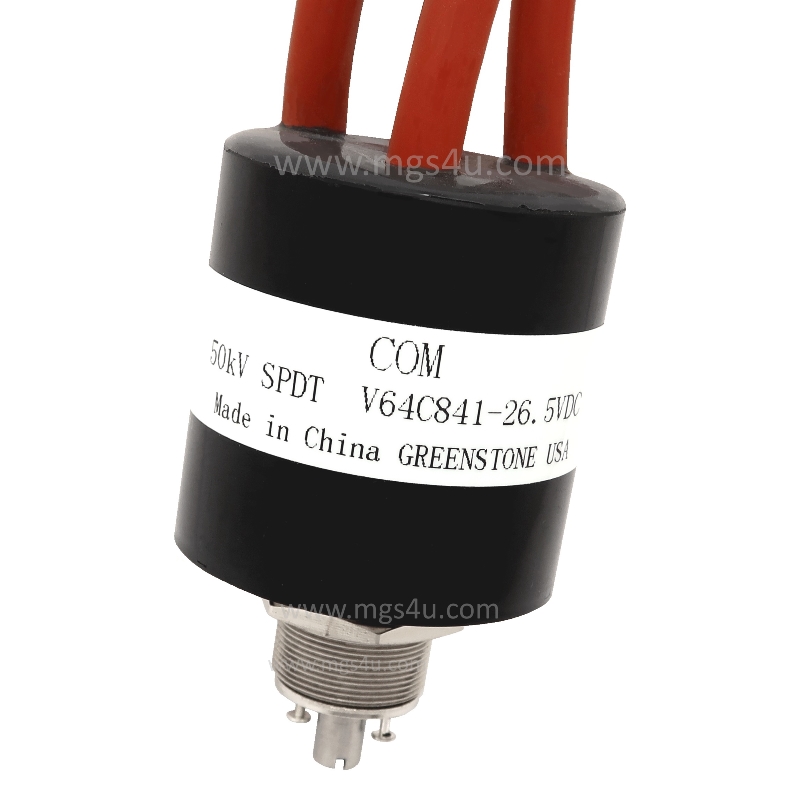
INSULATION RESISTANCE – The minimum allowable DC resistance between two test points, such as the relay contacts and the coil, or contacts and case at a specified voltage, usually 500 Vdc.
HOLD VOLTAGE – The lowest voltage that can be applied without any change in state of the contacts from their energized position. This is just above the maximum drop-out voltage.
LEAKAGE CURRENT – The rms current conducted by the output circuit of the relay at maximum rated voltage with the contacts open.
LOAD LIFE – The minimum number of cycles the relay will make, carry, and break the specified load without contact sticking or welding, and without exceeding the electrical specifications of the device.
LOAD, RATED RESISTIVE – The electrical power encountered by the contacts when opening and/or closing. To be considered a resistive load the inductance in the test circuit shall not exceed an L/R ratio of 1 x 10 to the -4th power.
MECHANICAL LIFE – This is the number of operations which a relay can be expected to operate reliably under “no-load” conditions and remain within all applicable specifications, with a 95% reliability. Mechanical life is determined by sample testing.
OPERATING TEMPERATURE RANGE – The ambient temperature range over which an unmounted relay is specified to operate.
OPERATE TIME – The time interval between the coil energization (nominal coil voltage) and the closing of all normally open contacts. This includes time for the coil to build up its magnetic field (a significant limiting factor) and transfer time of the moveable contact between stationary contact(s), and bounce time after the initial contact make.
OVERLOAD – The maximum current the relay can make and break for the specified number of operations at the maximum system voltage without contact welding, sticking, or blowing of a 1 amp fuse connected between the case and load system ground.
PEAK TEST VOLTAGE – The peak AC voltage (at 60 Hz) that can be applied between external high voltage terminals, or between an open terminal and ground, for up to one minute with no evidence of failure. Peak test voltages must not be exceeded, even for very short pulses.
PICK-UP VOLTAGE – The voltage at which normally open contacts close and/or normally closed contacts open. Pick-up voltage increases as coil temperature rises.
PULL-IN VOLTAGE – The minimum coil voltage required to operate a relay so that all normally open contacts close.
RATED OPERATING VOLTAGE – The maximum voltage that may be safely applied to the power contacts of the relay for 1 minute without exceeding 30 microamps leakage or experiencing any arc-over or breakdown or more that 2 current surges of 100 microamps or greater.
RELEASE TIME – The time interval between the de-energizing of the coil and the relay returning to normal de-energized position. The time in milliseconds between removal of powerfrom the relay coil and final closing of all normally closed contacts. This time includes contact bounce.
SHOCK – Shock tests determine what acceleration a relay can sustain without normally closed contacts opening or normally open contacts closing. The shock pulse is an 11 millisecond 1/2 sine pulse. Contacts are monitored for chatter in excess of 10 microsecond and no transfer.
TEST VOLTAGE – The peak voltage that can be applied for short periods of time without evidence of breakdown. The peak voltage must not be exceeded even briefly. Doing so WILL result in damage.
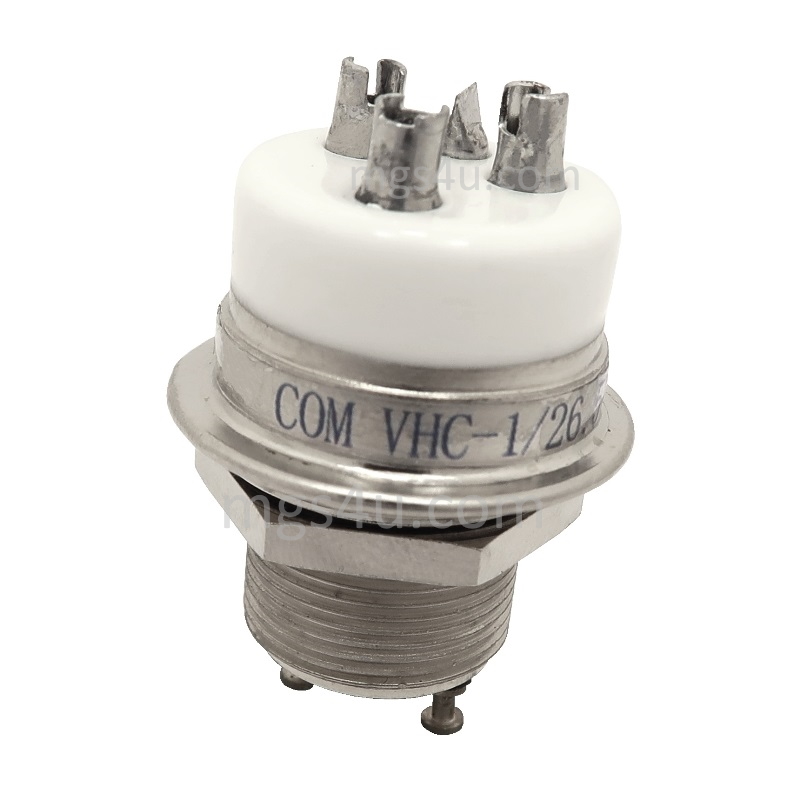
VACUUM RELAY – A switching relay that uses an absolute vacuum as the dielectric.

VIBRATION – The maximum acceleration over frequency range which the rely can withstand without impairing operation or causing contact chatter of more than 10 microseconds or contact transfer.
Basin Functionality and Types
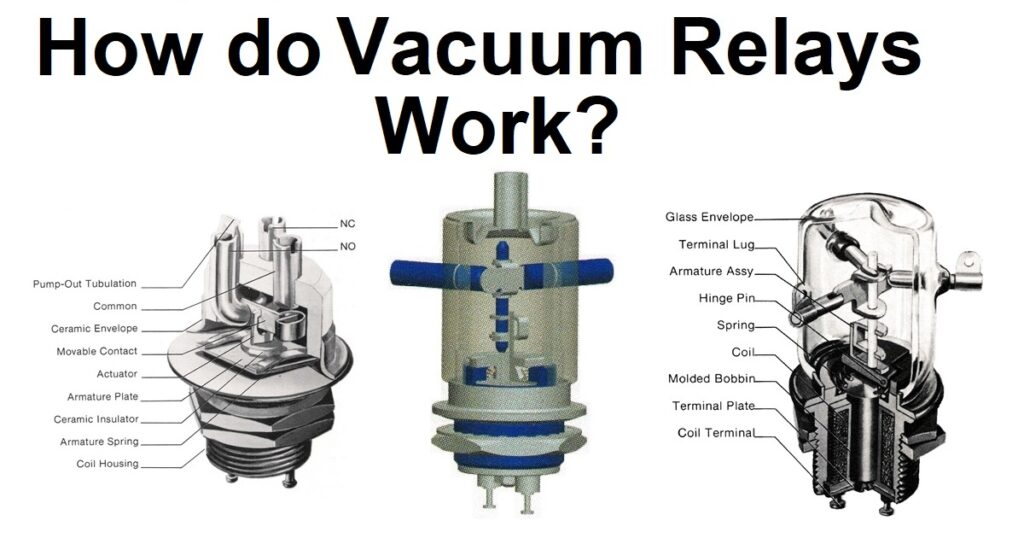
Learn more about the basic functionality and types of vacuum relays in our previous article:
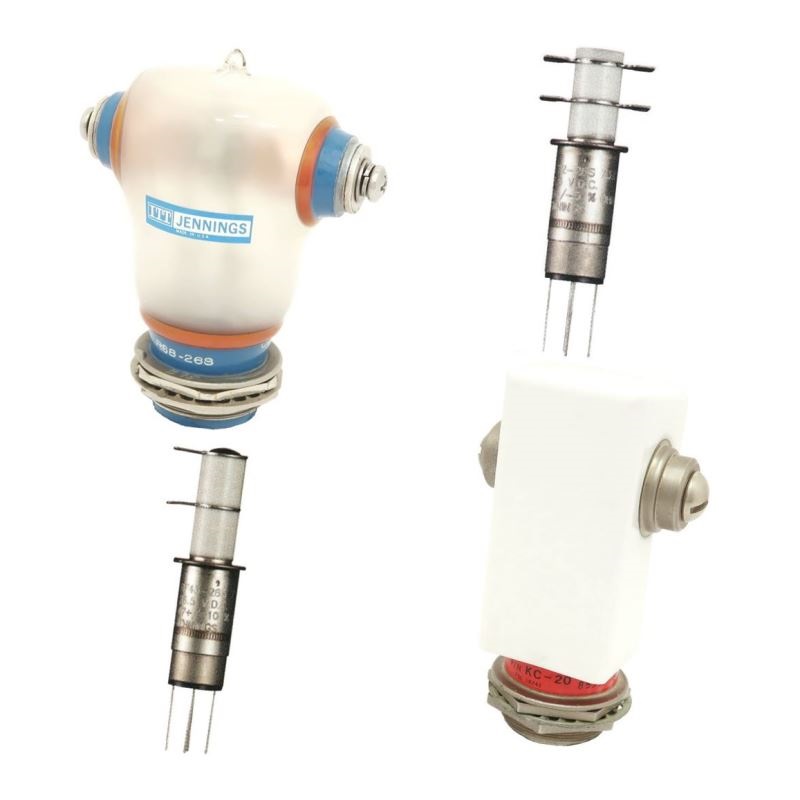
SPST relays
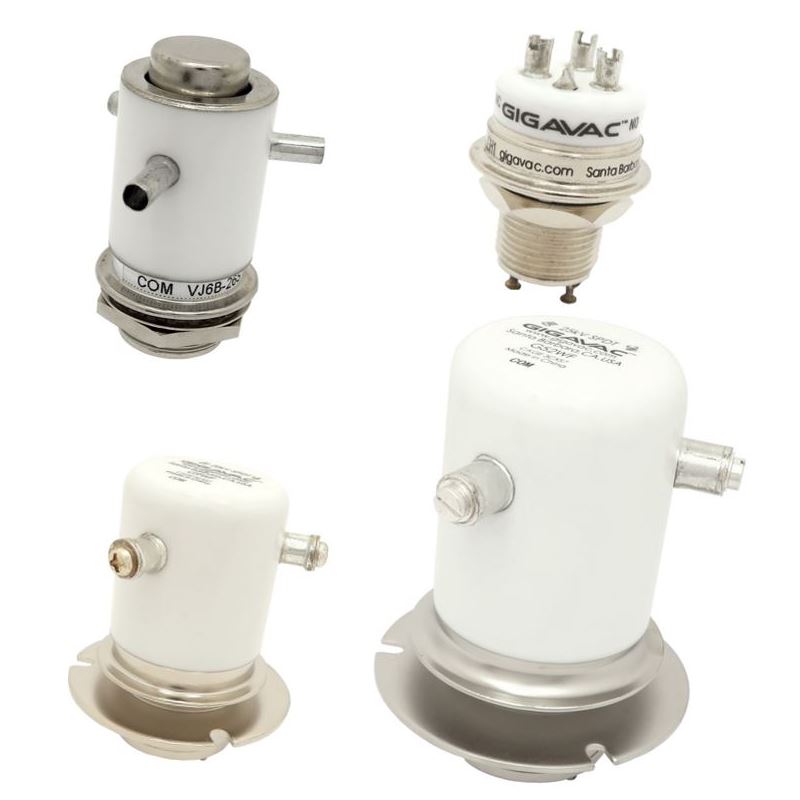
SPDT relays
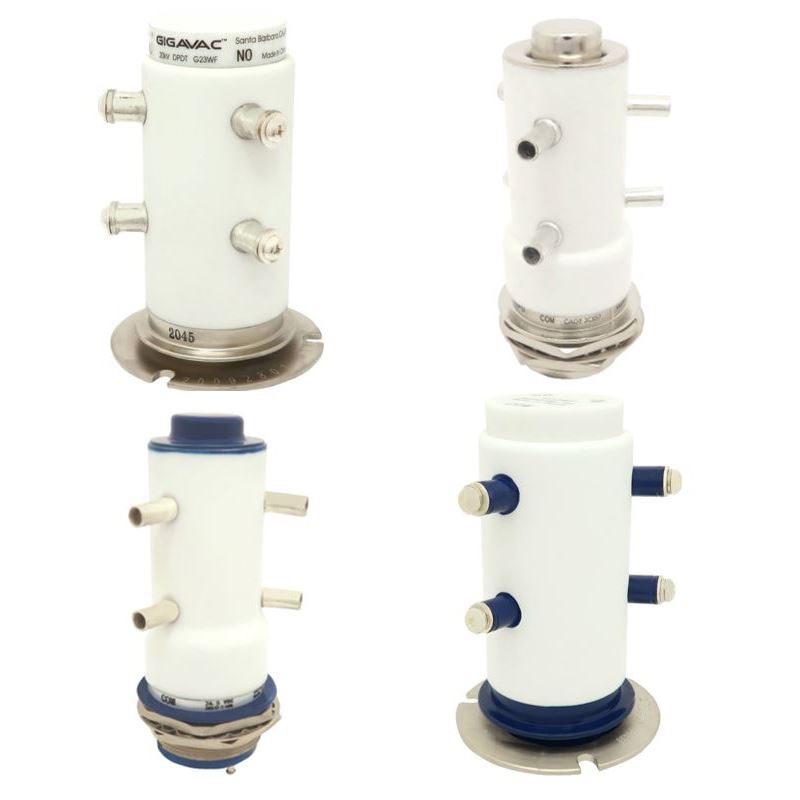
DPDT relays
About Max-Gain Systems
Max-Gain Systems, Inc specializes in vacuum relays, vacuum capacitors, insulator products, and other RF components. We offer vacuum capacitors and vacuum relays in Brand NEW, Oldstock NEW, and removed from working equipment tested and guaranteed good. Many customers require NEW, however, we test and rigorously check/test all of our remove from equipment parts. We can offer these at extreme discounts compared to the newly manufactured parts.
Max-Gain Systems, Inc. carries a full line of in-series, between series, right angle, T-shaped, quick connect, handie-talkie (BLACK), pigtails (coaxial jumpers), etc… RF adapters. Our RF adapter lines are constantly expanding. We keep our RF connector and adapter lines in stock. We ship both retail and wholesale quantities. To become a dealer / wholesale user, contact us with your potential usage.
Max-Gain Systems, Inc. is the number one supplier of fiberglass round hollow tube, square tube, square solid bar and round solid rod to the antenna manufacturing industry. We produce millions of feet a year for hundreds of different industries including but not limited to: marine / boating, aeronautical, agriculture, construction, emergency services, etc…. We have the unique ability to sell one piece or even a semi-truck full. Feel free to prototype using our fiberglass tube and rod then contact us for a quote on a production run. At production run quantities we can cut to your desired lengths at no additional charge, and we can also perform several different fabrications (example: drilling holes in precise locations along a tube) to ensure your delivered material is ready for assembly. We have several accessory items designed for our fiberglass including but not limited to: couplers, telescoping clamps, ferrules, etc…
Did you know? We will buy your used and overstock vacuum capacitors and vacuum relays?
Max-Gain Systems, Inc. is the one source to liquidate your excess inventory of vacuum capacitors and vacuum relays. REDUCE warehousing costs, REDUCE aging inventory & OPTIMIZE warehouse space by selling us your unwanted inventory. New and old stock, used and even removed from working equipment, one unit to one thousand plus, you can make money as well as go green. In addition, most of the surplus items we buy are able to go right back into facilities and into the hands of individuals that need a low cost replacement to keep their plants and broadcast stations up and running.
Sell your New and Used Overstock vacuum capacitors and vacuum relays by emailing us. Please include how many, the manufacturer’s part number, and their condition, along with your full contact information. We will reply within one business day.