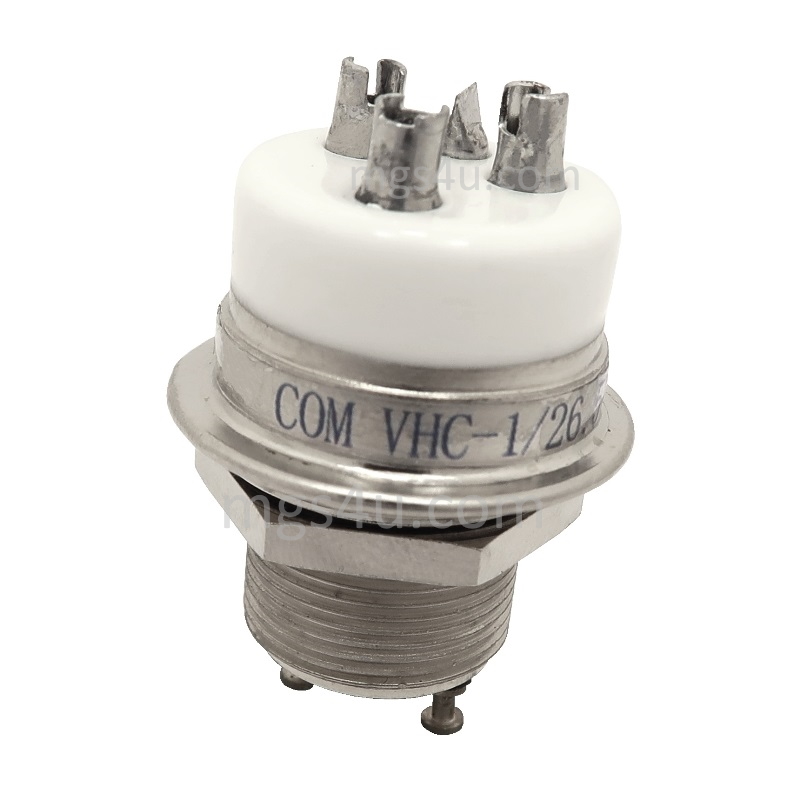
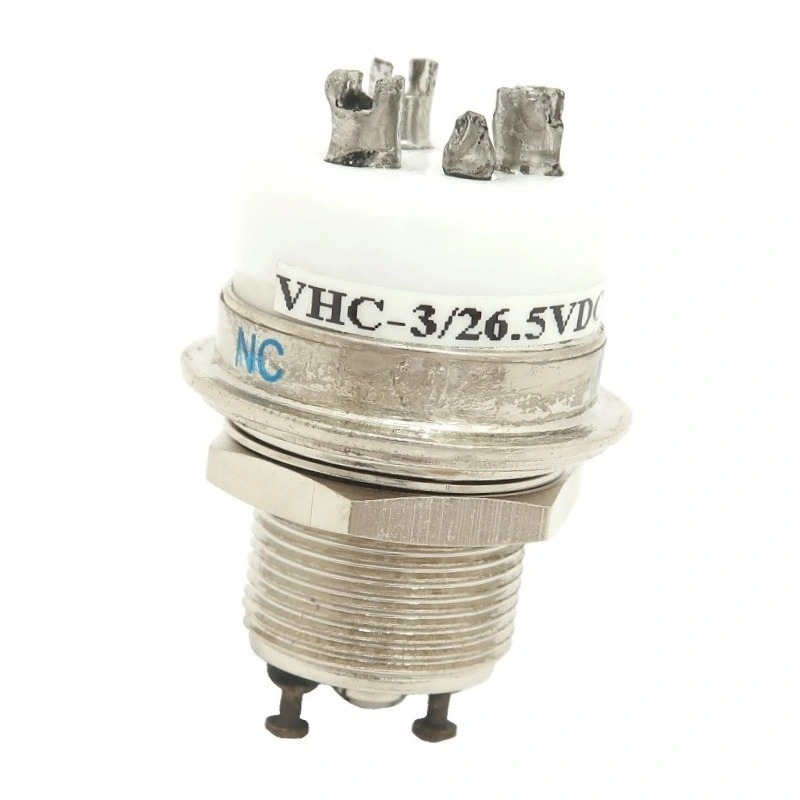
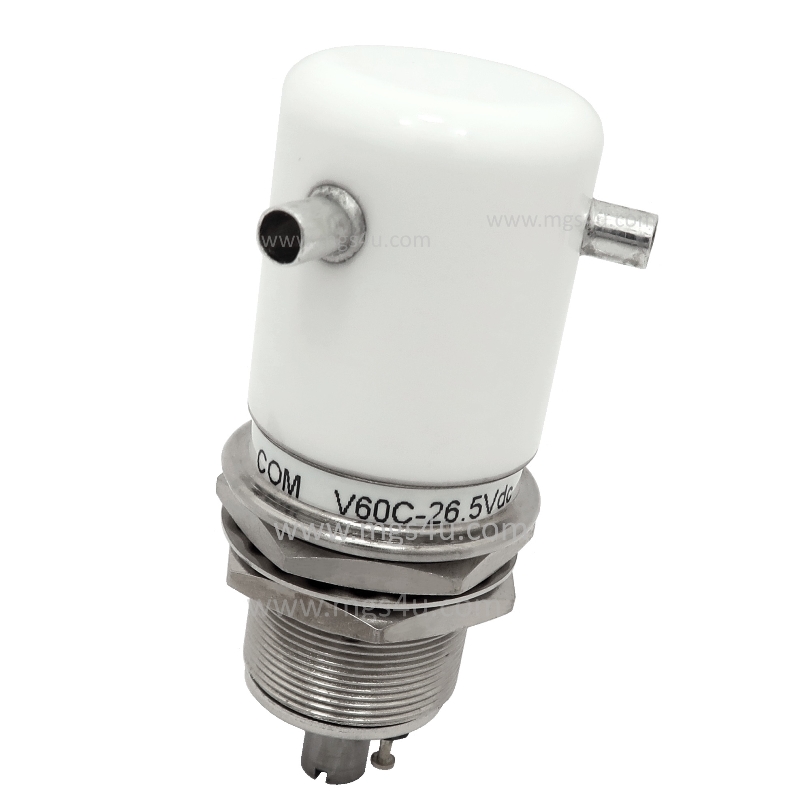
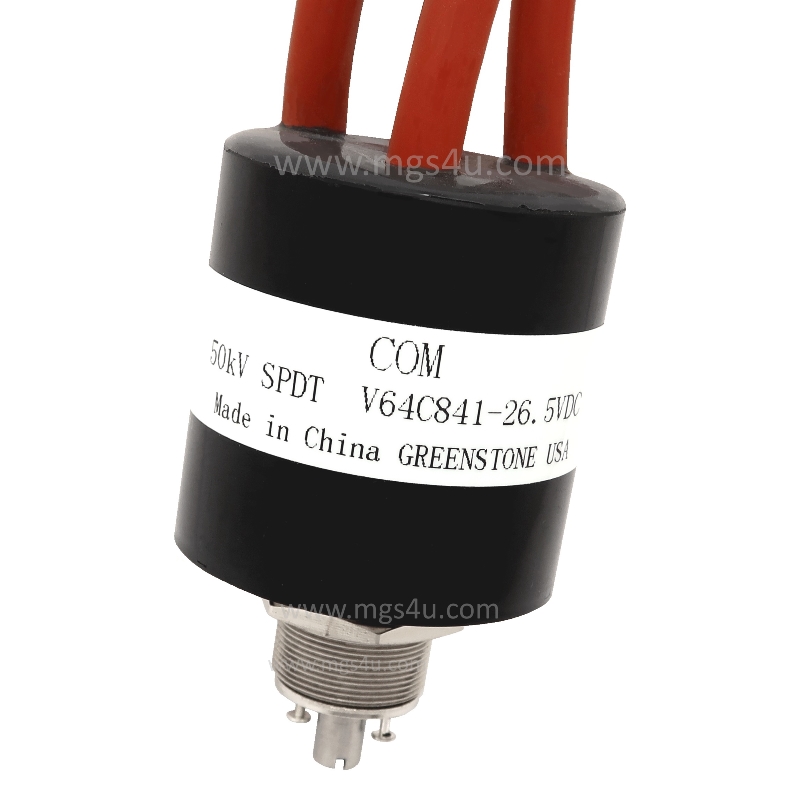
Vacuum Relays are widely used in airborne, mobile, and marine communication equipment. Typical applications include antenna coupling, tap changing on radio frequency (RF) coils, transmit/receive switching to an antenna, switching in pulse-forming networks and heavy duty power supplies. These relays are noted for fast operating speeds and the ability to withstand high voltages and carry heavy currents (at frequencies the 75 MHz) while maintaining low and stable contact resistance.
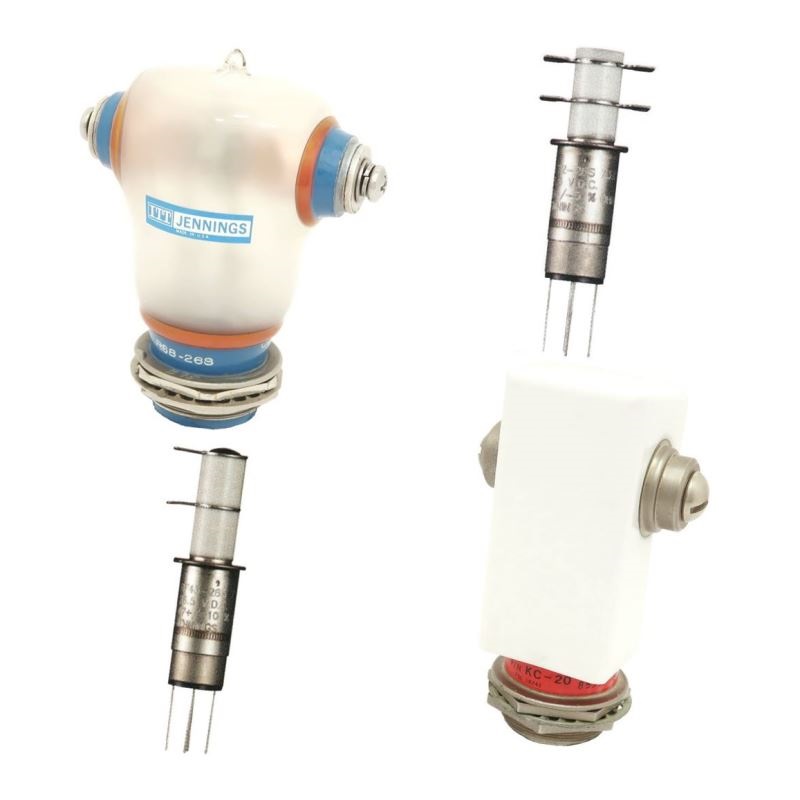
Vacuum Relays are available in single pole single throw (SPST) normally open (N/O) and normally closed (N/C) models, single pole double throw (SPDT), and double pole double throw (DPDT) configurations. Latching relays are available in some models.
Vacuum as a Dielectric
Vacuum is the ideal dielectric for high voltage relay switching. It has extremely high voltage breakdown characteristics, a fast recovery rate (up to 10kV per millisecond) and it provides an absolutely inert and non-reactive environment for switching contacts. Since there is no oxygen in a vacuum, contacts remain oxidation free. The high dielectric strength of the vacuum permits close contact spacing, on the order of 1000 volts per mil. The small movement required to operate a vacuum relay permits the use of small low mass actuators, allowing high operating speeds. Use of refractory metal contacts provides exceptional interrupting ability and ensures long contact life.
Voltage Breakdown in a Vacuum
Voltage breakdown can occur even within an absolute vacuum but the contact materials themselves must become the source of ionized materials to support an arc. Therefore, high strength and high work function materials like refractory metals are commonly used for contacts in order to raise the electrostatic field strength necessary to cause a voltage breakdown. In addition, refractory metals have high melting temperatures which reduce contact damage from arcs and result in longer life.
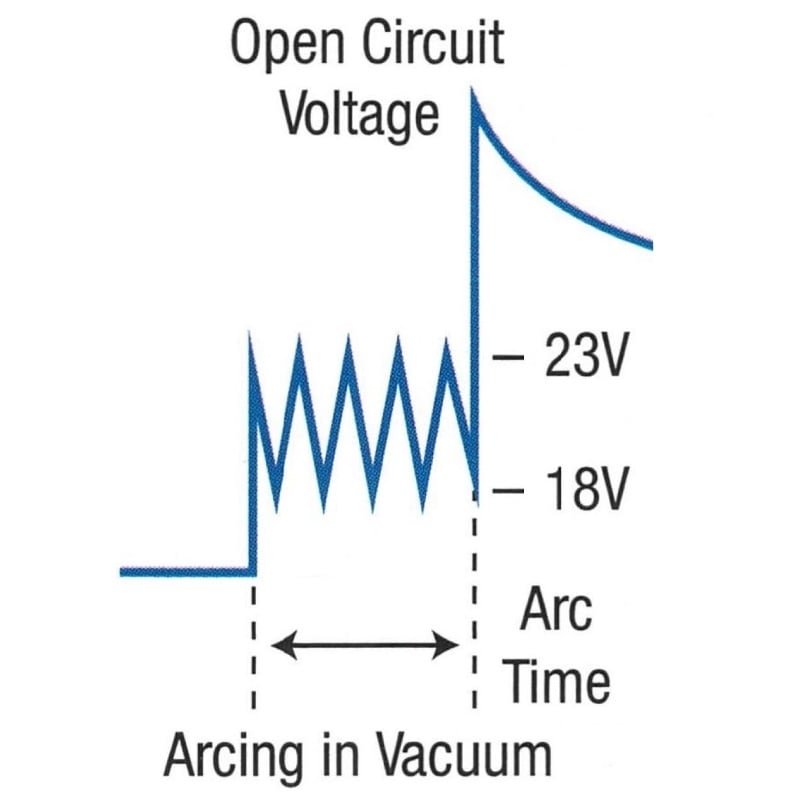
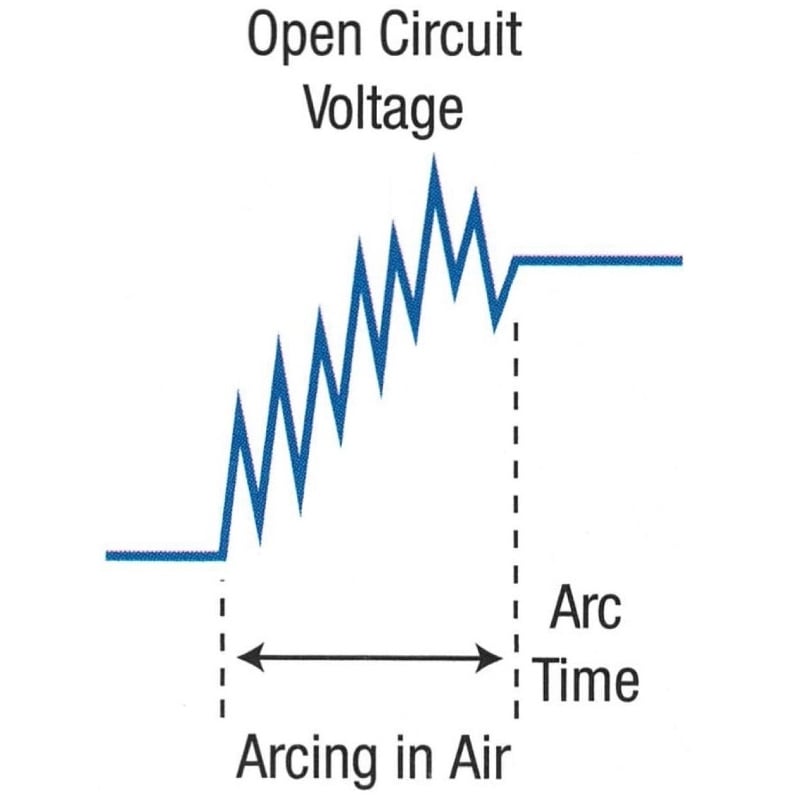
In load switching, an arc will always be created at the point when the contacts are close enough together to allow a voltage breakdown. Vacuum arcs are sustained at the relatively low voltage of 18 to 23 volts compared to arcs in air which are more erratic and range over a wider voltage. Vacuum arcs tend to be more easily controlled and extinguished than arcs in air. The high pressure region formed around a vacuum arc has a strong tendency to dissipate of “blow out” into the surrounding low pressure vacuum. This phenomena, along with the ability to use contact materials like pure tungsten and molybdenum which have very high melting points, means that vacuum relays and contactors typically experience much less contact erosion and have longer life than comparable air-break devices.

Pressurized Gas as a Dielectric (mixture containing primarily SF-6)
Pure high-pressure gas allows relays to attain high dielectric strength and to avoid oxidation. This dielectric is ideal for the high in-rush capacitive make and capacitive discharge loads. Typical Applications include electrostatic discharge (ESD) test equipment, cable test equipment and heart defibrillators. Gas-filled relays also provide low, stable leakage current in applications sensitive to current fluctuations, especially across open contact sets over long periods of time.
Gas-filled relays, however, should not be used when it is necessary to break a current. As the contract open, the gas is ionizing and an arc is formed and sustained for much longer than in vacuum.
The contact resistance of Jennings’ gas-filled relays is typically measured at 28V and will be higher and not as stable as in a vacuum relay.
Relay Testing
All of our Brand NEW relay offerings are tested under a sampling basis. Tested for Environmental, high voltage, and radio frequency (RF) test parameters. All relays are individually tested prior to shipment for pull-in voltage, drop-out voltage, timing characteristics, contact resistance, and dielectric strength so you can be sure that any relays you get from Max-Gain Systems are guaranteed to be operational.
Vibration, shock, humidity, salt spray, temperature effects, current load and reliability tests are regularly performed on a sampling basis.
Current tests are made at maximum recommended envelope temperatures.
Mechanical life reliability tests are performed with equipment that will detect relays which cycle without proper sequence of contact operation. Some relay types have been checked to more than 100,000,000 operations without defect.
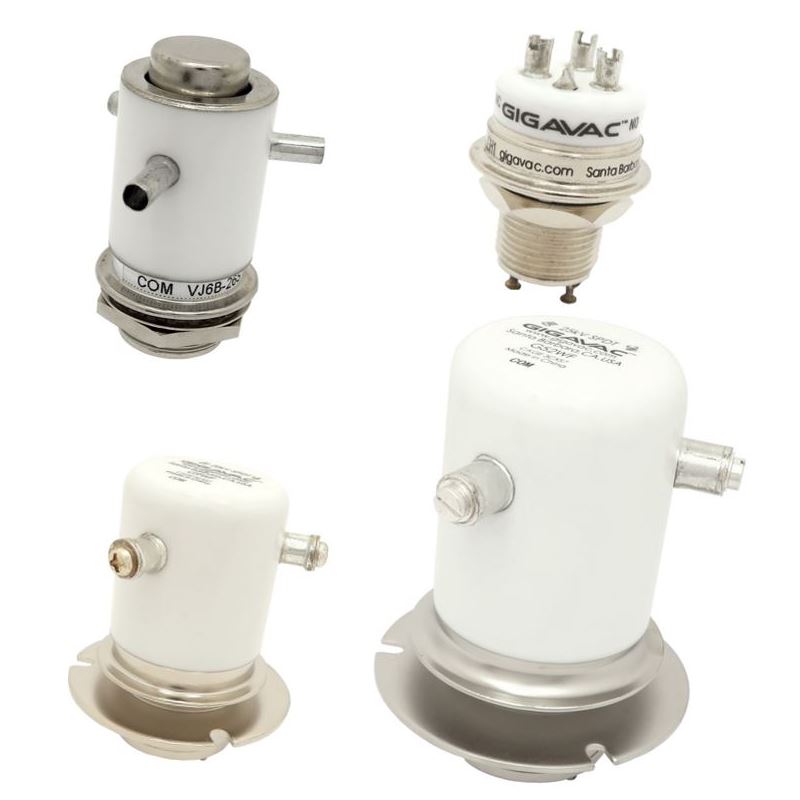
SPST relays
SPDT relays
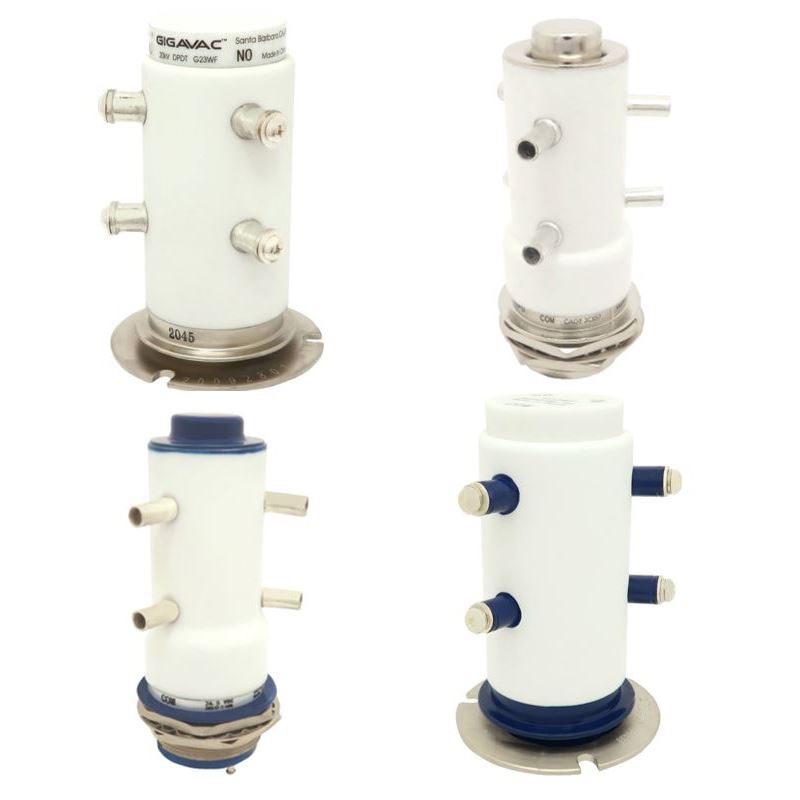
DPDT relays
About Max-Gain Systems
Max-Gain Systems, Inc specializes in vacuum relays, vacuum capacitors, insulator products, and other RF components. We offer vacuum capacitors and vacuum relays in Brand NEW, Oldstock NEW, and removed from working equipment tested and guaranteed good. Many customers require NEW, however, we test and rigorously check/test all of our remove from equipment parts. We can offer these at extreme discounts compared to the newly manufactured parts.
Max-Gain Systems, Inc. carries a full line of in-series, between series, right angle, T-shaped, quick connect, handie-talkie (BLACK), pigtails (coaxial jumpers), etc… RF adapters. Our RF adapter lines are constantly expanding. We keep our RF connector and adapter lines in stock. We ship both retail and wholesale quantities. To become a dealer / wholesale user, contact us with your potential usage.
Max-Gain Systems, Inc. is the number one supplier of fiberglass round hollow tube, square tube, square solid bar and round solid rod to the antenna manufacturing industry. We produce millions of feet a year for hundreds of different industries including but not limited to: marine / boating, aeronautical, agriculture, construction, emergency services, etc…. We have the unique ability to sell one piece or even a semi-truck full. Feel free to prototype using our fiberglass tube and rod then contact us for a quote on a production run. At production run quantities we can cut to your desired lengths at no additional charge, and we can also perform several different fabrications (example: drilling holes in precise locations along a tube) to ensure your delivered material is ready for assembly. We have several accessory items designed for our fiberglass including but not limited to: couplers, telescoping clamps, ferrules, etc…
Did you know? We will buy your used and overstock vacuum capacitors and vacuum relays?
Max-Gain Systems, Inc. is the one source to liquidate your excess inventory of vacuum capacitors and vacuum relays. REDUCE warehousing costs, REDUCE aging inventory & OPTIMIZE warehouse space by selling us your unwanted inventory. New and old stock, used and even removed from working equipment, one unit to one thousand plus, you can make money as well as go green. In addition, most of the surplus items we buy are able to go right back into facilities and into the hands of individuals that need a low cost replacement to keep their plants and broadcast stations up and running.
Sell your New and Used Overstock vacuum capacitors and vacuum relays by emailing us. Please include how many, the manufacturer’s part number, and their condition, along with your full contact information. We will reply within one business day.